

London Plus has recently launched a new project which will support the Arts, Cultural, and Voluntary Community and Social Enterprise (VCSE) sectors to identify and communicate the impact of creative health activities.
In this blog, find out more about one of the organisations involved in this project – Entelechy Arts.
What does Entelechy Arts do?
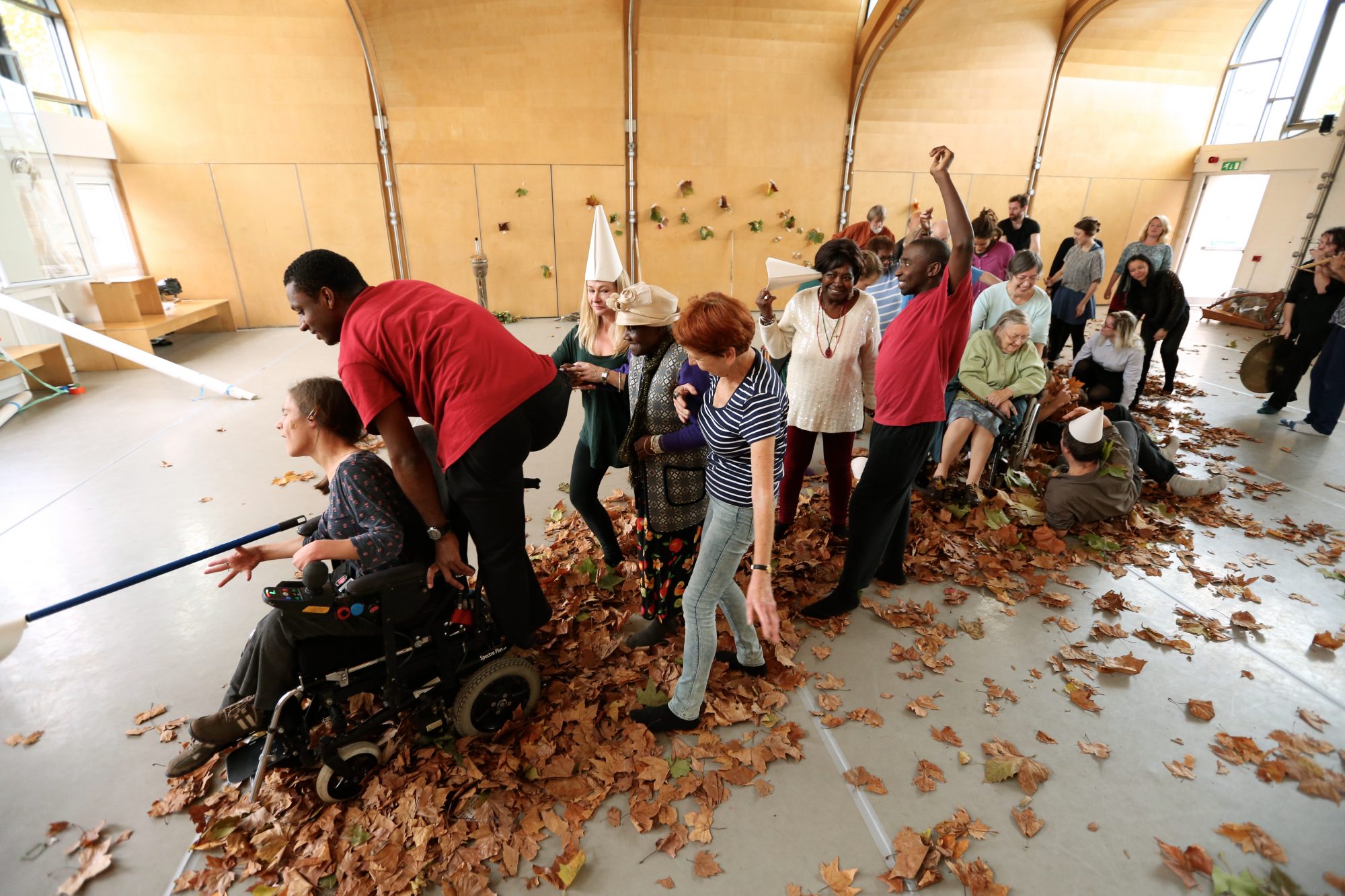
Entelechy Arts was set up to help people with disabilities, mental health challenges, and learning disabilities reintegrate into their communities. We find that creative activities are a great way to begin this process, so that’s what we focus on.
We now work with people that suffer from any form of isolation within South East London.
What are your values?
Fundamentally, we are about using creativity to transform people’s lives, and for people that we work with to drive that process and transfer as much power to those people as possible. It’s not enough to do creative activities with people, you have to give people the right tools so they can go and create things for themselves.
How do you make a difference to people’s wellbeing?
The emotional benefits of creativity are endless. There’s a big element of self-expression, but also the process of honing skills and seeing improvement is valuable as well.
We work a lot with older people and believe that creative activity can slow down, address, or offset the impact of dementia. There are so many ways that creativity can positively impact people’s lives.
Is there a project or initiative that you are particularly proud of?
We recently recruited a member of the Entelechy Arts community to a Director role within the organisation. This has really transformed the way that we work.
The person we recruited has profound and multiple learning disabilities and communicates non-verbally, so it’s a very welcome rupture to the Western, ableist ways of working that are so embedded in organisations.
What we’re understanding is that somebody with a disability has a different approach to time. Some things take longer, some things need to be much quicker. We’re proud of the fact that we’re willing to break down our assumptions and get rid of some ways of working in order to make our organisation more inclusive and representative of the communities we serve.
This also means that the organisational decisions that we make are informed by lived experience (which all decisions should be).
Why did you decide to get involved in our Creative Health Impact project?
We wanted to learn from peers that operate in different fields within the health space. For example, how a sports or gardening club might operate. In that sense, this project works as a really useful and interesting network.
More fundamentally, the workshop has helped to crystallise how we work, and has certainly demystified various processes. It has been reassuring for us to know that we don’t need to change our current activities in order to fit in with commissioning and the social prescribing model.
We also have concerns around the arts and how larger organisations tend to take control and get the funding, even if they do not have the correct expertise and are not best placed to reach certain communities. Finally, we hope this project can help to reform this structure by demonstrating the incredible impact of smaller, on-the-ground organisations.
***
Creative Health project: find out moreFollow us on socials to keep up to date: