


International Volunteers Day is an opportunity to acknowledge and celebrate all individuals who dedicate their time and energy to make a positive contribution to their community. We know that volunteering strengthens communities and helps tackle societal challenges by bringing people together. For refugees in particular, volunteering offers a chance to build connections, develop skills, and contribute meaningfully to the society that is now their home.
Below, Olga Dudnik who came to London from Ukraine in May 2022, shares her own experiences of settling in the UK and the important role that volunteering and community work played in helping her find a sense of purpose and feel a part of a new community.
The war in Ukraine has triggered the largest and fastest-growing displacement crisis in Europe since World War II. Since 2022, millions of Ukrainians have been forced to leave their homes, communities, and everything familiar in search of safety for themselves and their families.
Once in the UK, Ukrainian refugees are no longer confronted with the immediate dangers of war, but they face the profound challenge of rebuilding their lives in an unfamiliar environment, and without the support networks they once relied upon. Volunteering and engaging with charities or community groups can help reduce isolation, create meaningful connections, and support the process of rebuilding a sense of belonging and stability.
“When I came to the UK, I only knew one person. I continued to work remotely for a company in Ukraine, but after a few months realised that I was finding it hard to settle into this new life. I felt very isolated, so I joined the Ealing and Hounslow Community Volunteering Service Walk and Talk group, which would meet in local parks. This helped me get out of the flat and get to know the local area. It was also a way of meeting people, improving my English and helping me integrate with the local community. After a while, I began leading the International Walk and Talk group, which started with 6 participants from 2 countries but ended up growing to more than 80 people from 9 countries”
Using this experience, alongside her professional skills as an experienced and senior project manager in Ukraine, Olga went on to work for EHCVS as service manager for the Ukrainian project, which was set up to support Ukrainian refugees. Refugees can face many challenges, including language and cultural differences, coping with the trauma and guilt of leaving Ukraine and adapting to a new reality without the networks and people who might have supported them. The uncertainty and disruption are also often compounded by the loss of employment or housing.
The Ukrainian project aims to provide practical support for Ukrainians displaced by conflict, including helping with access to housing, healthcare, education, and employment, fostering cultural integration and mutual understanding and ultimately strengthening the resilience of the whole community.
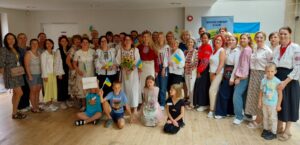
The project has gone from strength to strength with more than 500 attending language and employability training sessions; 300 individuals supported through counselling and support groups, and housing assistance provided for 50 families. There have also been regular community events promoting cultural exchange.
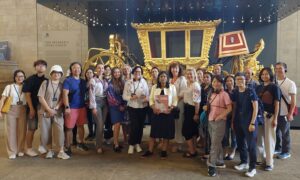
This summer alone, the group has organised 15 events, including Saturday meetings focused on employability, English and wellbeing, Movie Club sessions and trips to both Southampton and Eastbourne, alongside a celebration of Ivana Kupala – the Ukrainian summer solstice festival.
“All my life, I was involved in volunteering projects. In Ukraine, I was a speaker & learning facilitator for well-known Ukrainian and international NGOs & Academic Institutions and saw projects from ideas to implementation. Through volunteering and now this community work, I’ve been able to use my skills to help others, but even for myself, it has helped me to build myself a new life and feel like I am a part of the community”